How to remove standing water from your backyard
Standing water in an Arizona backyard is a mosquito hatchery and a foundation risk. Here's how to drain it fast, fix the cause, and keep it from coming back.
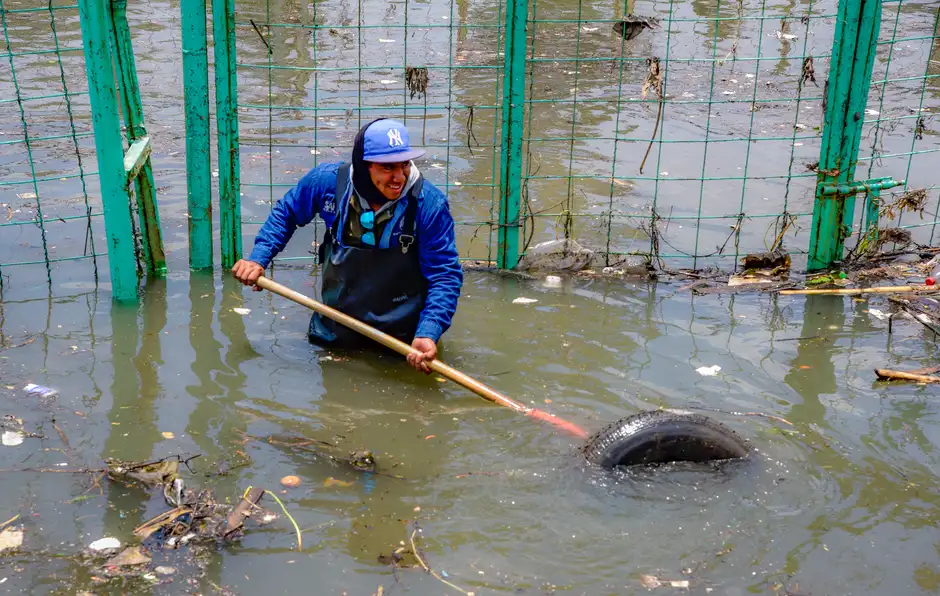
You remove standing water from an Arizona backyard by finding where it's coming from, pumping or draining it out, then fixing whatever let it pool in the first place. If it's a monsoon puddle, a sump pump and a shop vac usually clear it in an afternoon. If it's a slab leak or a broken irrigation line, the water will keep returning until the source is repaired.
This guide walks through the causes we see most often in the Phoenix metro, the fastest ways to drain a flooded yard, the health risks of leaving water sitting, and the point where calling a pro saves you money.
Why Standing Water in an Arizona Backyard Is Different
Standing water in an Arizona backyard is a drainage problem that behaves nothing like it does in wetter climates. Our soil is caliche-heavy and hydrophobic in spots, meaning it repels water instead of absorbing it. A single monsoon cell can drop 1 to 2 inches in under an hour, and that water has nowhere to go.
We also deal with the opposite problem most of the year. From May through September, temperatures push past 110°F, and any water left sitting evaporates fast on the surface but stays trapped under turf, gravel, or pavers. That trapped moisture is what rots roots, softens block walls, and seeps toward your slab.
If you're dealing with water inside the house too, not just the yard, that's a different job. Our team handles Water Removal in Arizona for both interior and exterior flooding, and we see the two problems together more often than people expect.
What Causes Standing Water in Arizona Backyards?
Standing water in an Arizona backyard almost always traces back to one of six sources, and identifying the right one is the difference between a permanent fix and bailing the same puddle every storm.
- Monsoon runoff - a 30-minute storm overwhelms grading and swales that were fine the other 364 days.
- Irrigation leaks - a cracked drip line or stuck valve can dump 200+ gallons a day into the same spot.
- Slab leaks - a pinhole in a copper line under the foundation pushes water up through the soil.
- Poor grading - yards that slope toward the house instead of away from it.
- Clogged or missing French drains - the trench fills with silt and stops moving water.
- Pool overflow and backwash - a stuck autofill or a backwash cycle routed to the wrong spot.
Slab leaks are the sneaky one. They don't announce themselves with a burst - they just keep the same patch of gravel wet for weeks. We handle Slab Leak Water Removal in Arizona regularly in older Sun City and Scottsdale homes where the original copper lines are now 40 to 50 years old.
How Do I Remove Standing Water From My Backyard in Arizona?
You remove standing water from an Arizona backyard by matching the tool to the volume. A half-inch puddle after a storm is a squeegee job. Three inches covering 500 square feet is a pump job. Here's the order we work in.
1. Cut the source first
If the water is still rising, shut off the irrigation timer, the pool autofill, and the main water valve if you suspect a supply line. Pumping water that's still flowing in is a losing game.
2. Move it to a legal drain point
You can discharge to the street gutter, a dry well, or a landscaped area that slopes away from the house. Never dump it into the sewer cleanout - that's a code violation in most Valley municipalities and can back up your neighbor's line.
3. Pump or vacuum it out
A submersible utility pump moves 1,500 to 3,000 gallons per hour and handles most backyard flooding. A wet/dry shop vac is better for shallow water and tight spots against the foundation. For anything over 2 inches deep across a large area, rent a trash pump.
4. Break up the surface tension
On hard-packed caliche, water sheets instead of soaking in. A garden fork punched into the low spot every 12 inches gives it somewhere to go.
5. Dry the area
Sun and airflow do the rest. Rake out debris, spread the gravel or mulch back out, and let it breathe for 24 to 48 hours before you walk on it heavily.
How to Pump Standing Water Out of a Yard in Arizona
Pumping standing water out of a yard in Arizona is straightforward if you set up correctly. The mistakes happen in the setup, not the pumping.
- Set the pump on a flat paver or brick so it doesn't suck mud.
- Run the discharge hose downhill and downhill only - every uphill foot costs you flow.
- Keep the intake screen clear. Check it every 15 minutes.
- Never let the pump run dry. Submersibles overheat in under a minute without water.
- Discharge at least 10 feet from your foundation and 5 feet from any neighbor's property line.
A 1/3 HP submersible pump will clear a typical 20x20 foot puddle in 45 to 90 minutes. If the water is back within a day, you have a source problem, not a drainage problem. That's when it's worth having someone look at it - our Standing Water Removal in Arizona service starts with finding the source, not just hauling the water away.
Is Standing Water Dangerous in Arizona?
Yes, standing water in Arizona is dangerous, and it's worse here than in most states because of what breeds in it. Maricopa County tracks West Nile virus and St. Louis encephalitis, both carried by Culex mosquitoes that breed in as little as a bottle cap of water.
The timeline matters. Mosquitoes go from egg to biting adult in 7 to 10 days in 90°F weather. That means a puddle left after a July storm is a breeding site by the following weekend.
Other risks we see:
- Foundation damage - saturated soil expands, then shrinks as it dries, cracking slabs and block walls.
- Termites and ants - both are drawn to moisture against the house.
- Landscape death - most desert plants, including palo verde and mesquite, rot at the root crown in 3 to 5 days of standing water.
- Pool chemistry crashes - runoff carries dirt and debris that eat your chlorine.
If the water has been sitting more than 48 hours and it's near the house, treat it as a real problem, not a nuisance.
Common Mistakes That Make Backyard Flooding Worse
The mistakes we see most often turn a one-day cleanup into a two-week project. Watch for these.
- Pumping water toward the house. Always discharge away from the foundation, even if it means a longer hose run.
- Dumping it in the sewer cleanout. Illegal in most Valley cities and a good way to flood your own laundry room.
- Ignoring the source. If water returns within 24 hours, you have a leak, not a drainage issue.
- Letting it sit overnight. Mosquitoes and termites don't wait for you to get around to it.
- Walking on saturated turf. You'll compact the soil and make the drainage worse next time.
- Skipping the fix on grading. A $400 regrade now beats a $6,000 foundation repair later.
We get called to a lot of these in the far West Valley, especially around Water Removal in Surprise where new-build yards often settle for the first two or three monsoon seasons before the grading stabilizes.
How to Prevent Standing Water in an Arizona Backyard
Preventing standing water in an Arizona backyard comes down to three things: slope, drainage, and irrigation discipline. Get those right and you'll skip most of the emergency calls.
Fix the slope
Your yard should drop 6 inches over the first 10 feet away from the foundation. A $15 level and a string line will tell you in five minutes whether you have a problem.
Install or clear drainage
A French drain costs $1,500 to $4,000 installed in 2026 pricing, depending on length and whether it ties into a dry well. Clean the gravel and flush the line every fall before monsoon season.
Audit the irrigation
Run each zone for 5 minutes and watch for puddles. A stuck valve or a cracked drip line is a $50 fix that prevents a $500 water bill.
Redirect downspouts and pool overflow
Every downspout should discharge at least 4 feet from the foundation onto a splash block or into a buried line.
If you've had repeated flooding and you're in one of the older communities, it's worth having the drainage looked at by someone who knows the local soil. We do a lot of this work around Water Removal in Sun City, where 1960s-era yards were graded for a very different climate than the one we have now.
When to Call a Professional
Call a professional when the water comes back within 24 hours, when it's within 5 feet of your foundation, when it's more than 2 inches deep across a large area, or when you can't find the source.
Those four situations almost always mean a slab leak, a failed French drain, or a grading problem that needs equipment and a moisture meter to diagnose. AZ Water Remover Pros handles standing water pumping, source detection, and full extraction for yards and interiors across the Phoenix metro. We find the source, remove the water, and tell you what needs to change so it doesn't happen again.
Frequently Asked Questions
How do I remove standing water from my backyard in Arizona?
Shut off the source, then pump or vacuum the water to a legal drain point like a street gutter or dry well. A 1/3 HP submersible pump clears a typical backyard puddle in 45 to 90 minutes. If water returns within 24 hours, the source needs repair.
What causes standing water in Arizona backyards?
The most common causes are monsoon runoff, irrigation leaks, slab leaks, poor grading, and clogged French drains. Caliche soil makes it worse because it repels water instead of absorbing it. A slab leak can push 50 to 200 gallons a day into the same spot without any visible pipe break.
Is standing water dangerous in Arizona?
Yes. Culex mosquitoes breed in standing water in 7 to 10 days and carry West Nile virus. Saturated soil also cracks slabs, attracts termites, and kills desert plants within 3 to 5 days. Treat any puddle near the foundation as urgent.
Who pumps standing water out of yards in Arizona?
Water removal and restoration companies handle it, along with some landscape contractors. AZ Water Remover Pros pumps standing water, finds the source, and handles interior extraction if the water made it inside. Call (833) 640-1438 for same-day service across the Phoenix metro.
How much does backyard water removal cost in Arizona?
Typical 2026 pricing runs $250 to $600 for a standard backyard pump-out, and $800 to $2,500 if the source is a slab leak that needs detection and repair. Emergency after-hours calls add $100 to $250. Most homeowners insurance covers the extraction if the cause was a sudden pipe failure.
Get Help With Water Removal in Arizona
If your backyard is holding water and you can't find the source, we'll come out, pump it dry, and tell you exactly what's causing it. AZ Water Remover Pros serves the entire Phoenix metro with same-day standing water pumping and full extraction.
Call (833) 640-1438 and we'll get your yard dry and your drainage fixed.